


Arthropathy of the knee (knee arthrosis) is a degenerative dystrophic disease accompanied by the progressive destruction of cartilage and, in the process, the progressive involvement of periarticular structures.Left untreated, it can lead to limited mobility or even disability.
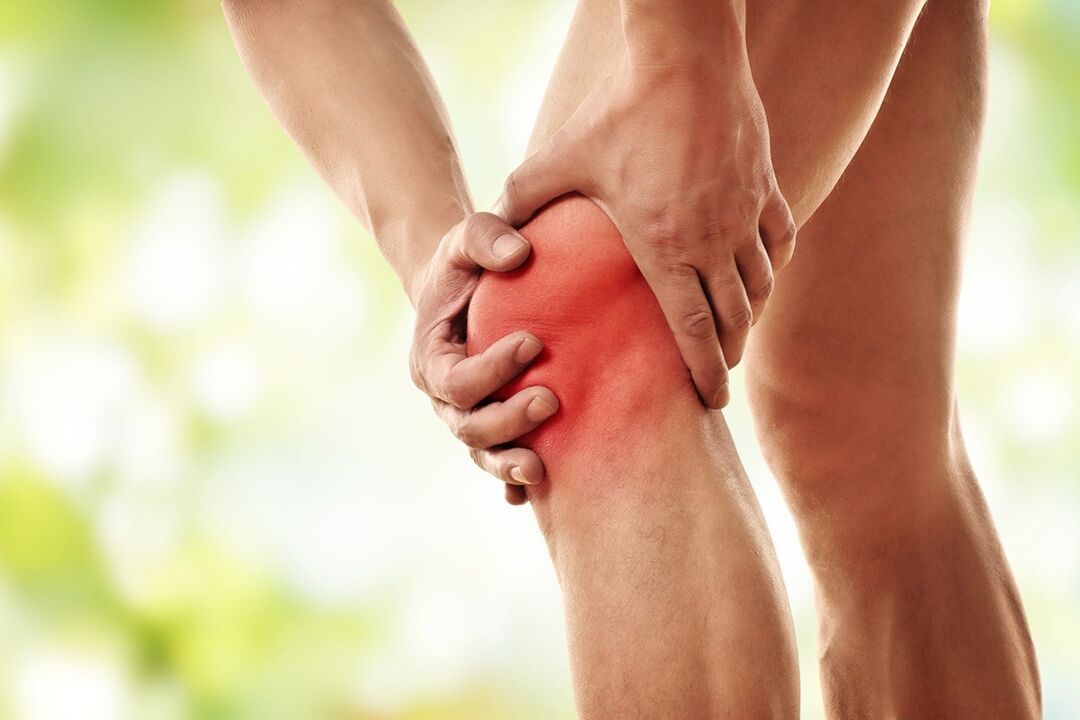
disease description
70-85% of patients over the age of 65 who consult a doctor with knee pain are diagnosed with knee arthropathy.Older adults are at risk because as we age, joint cartilage becomes thinner, microcracks develop in it, and it gradually collapses.New pathological changes appear:
- The composition of the synovial fluid changes and becomes less, which is why the bone surfaces begin to contact and collapse;
- The development of bone growth (osteophytes);
- The joint capsule becomes denser, causing joint stiffness;
- The muscles around the joint can spasm.
Without treatment, the knee can become deformed and movement can be significantly limited.May affect one or both joints
According to statistics, one in five people in the world suffers from knee joint disease.Most of the disease is diagnosed in people over 40 years old, but the age factor is not the only reason for the development of the pathology.
Why does knee joint disease occur?
In older patients, knee arthritis occurs due to the natural wear and tear of cartilage tissue.Other causes of the disease:
- Congenital disorders of the musculoskeletal system;
- hormonal changes, including endocrine disorders;
- Knee injuries, including frequent microinjuries;
- previous surgical intervention;
- autoimmune diseases;
- chronic joint disease;
- Regularly increasing the load on the knee joint, such as running or jumping, standing continuously, or kneeling;
- Genetic predisposition.
Women over 40, athletes, overweight patients and people in the construction industry are at risk.
How to identify arthropathy of the knee joint?
The disease develops slowly, lasts for several years, and has a chronic course.Its changes are irreversible, so it's important to start treatment as early as possible when symptoms appear.
The first signs of knee joint disease:
- Stiffness in the knees;
- Discomfort when straightening or bending the knee joint or going up or down stairs;
- Creaking or clicking sounds when moving;
- Mild knee pain that only occurs after standing for a long time and disappears after resting.
The discomfort will increase over time.Severe stiffness, movement impairment, and severe pain occur, which the patient cannot shake off even at rest.A person has difficulty walking, sitting, or standing up.Without treatment, the knee joint can become deformed, leading to disability.
The severity of the changes and the likelihood of recovery depend on the stage of the disease.
Degree of knee joint disease
The severity of the disease is divided into 4 levels:
- My degree.There are almost no symptoms when the disease occurs.There is slight discomfort in the knee after exercise, but it does not affect normal life.Pathological changes can only be detected by X-rays.
- Level 2.Crunching and periodic pain occurs with physical activity, walking, climbing stairs, squatting, or standing for long periods of time.X-ray images can show the first signs of joint space narrowing and osteophyte formation.
- Level three.Pain syndrome can become permanent and not go away even with rest.The knee hurts especially in the morning and evening; the pain is sharp and tolerable during the day.As the degenerative process begins at this stage, the person's gait changes, a limp begins, and a crunching sound is heard when moving.There is "joint mouse" - a condition in which particles of damaged bone or cartilage enter the synovial cavity and cause severe pain.The knee becomes deformed and may become inflamed and swollen.X-rays show signs of joint deformity, osteophytes, significant joint space narrowing, and meniscal damage.
- Level four.If left untreated, this disease can become extremely serious.The cartilage, ligaments and meniscus are completely destroyed, making the joint unable to move, the joint surface deformed, and a large number of osteophytes appear.These changes can cause severe pain and disability.
diagnosis
Diagnosing knee arthritis is not difficult.Orthopedic surgeon-traumatologist performs examination and treatment.He examines the patient's knee, assesses motor activity, studies clinical findings, and performs palpation to identify areas of swelling and the presence of fluid collection.
To confirm preliminary conclusions, he prescribed an instrumental examination:
- X-ray examination - allows you to identify narrowing of the joint space and the presence of osteophytes;
- CT scans of joints provide more information than X-rays; show the condition of the joint cavity;
- Ultrasound examination of joints - can determine the amount of fluid in the joint cavity, the presence of osteophytes, assess the condition of surrounding soft tissues, and the thickness of hyaline cartilage;
- MRI - suitable not only for studying bone and cartilage tissue, but also for studying ligaments, menisci, synovium and other structures;
- Arthroscopy is an invasive diagnostic method; during the procedure, the synovial fluid may be punctured.
In addition, clinical and biochemical blood tests, immunologic studies, and rheumatoid factor testing may be required.
Treatment of Arthropathy
Orthopedic surgeons should treat knee arthrosis based on clinical manifestations and degree of joint damage.You cannot treat yourself.
Your doctor may prescribe the following types of medications:
- anti-inflammatory non-steroidal drugs;
- Chondroprotectants, which restore cartilage and prevent its further destruction;
- Analgesic blockade that effectively eliminates pain;
- Glucocorticoids, for severe disease;
- Antispasmodic medicine to eliminate muscle spasms.
Medical treatment is supplemented by physical therapy procedures: shock wave therapy, laser therapy, magnetic therapy, electrotherapy and phonotherapy.In addition, physical therapy and massage are performed.
You definitely need to keep your weight under control and try to lose any extra pounds, as excess weight can put extra pressure on your knee joints.It is important to stick to your diet; it should contain foods that nourish cartilage tissue.
In advanced cases, when the cartilage is severely damaged, surgery is required.This may be arthroscopy, osteotomy, or endoprosthesis.
The most favorable prognosis is if the joint is detected in the first stage, then changes can be slowed or even stopped.Stiffness or pain in your knees is not normal; it is worth getting checked to understand the cause of the discomfort.